

Dutch and Antillean researchers are joining forces to improve our understanding of nature on Aruba, Bonaire and Curaçao. A new project combines centuries-old natural history collections with high-tech image recognition and DNA barcoding.
Part of the Dutch Kingdom
There may be no country in the world where nature has been studied as thoroughly as in the Netherlands. This is due in very large part to the thousands of volunteers involved in collecting biodiversity data. Yet there are parts of the Kingdom of the Netherlands about which we know far less: the Caribbean islands. Which species occur there, how can they be identified, and how are they faring? For many groups of animals and plants, these are questions that we are currently unable to answer adequately.
Undiscovered species
The Caribbean part of the Kingdom of the Netherlands consists of six islands, three of which - Aruba, Bonaire and Curaçao - are located off the coast of Venezuela. Nature on these islands has not yet been very thoroughly documented. For groups such as grasshoppers, bees and beetles, no species lists are available, and all of these groups
still include species on the islands that are unknown. The Aruban mantis next to this text, for example, was described as new for science in 2026.

Collectionmaterial
Over the past 200 years, however, a great deal of fieldwork has been carried out on the islands. Specimens were collected and some were used in publications, but much of the material gathered remains unused in the collections of Naturalis Biodiversity Center. To make this knowledge more accessible and available for nature conservation, the ABC Natural History Collections project was launched in June 2026.


Collaborationbetween experts
The project is funded by the Dutch Research Council (NWO) as part of its research programme on collections with a colonial context. The project is a collaboration between the University of Aruba, the University of Curaçao, Leiden University, Naturalis, and the three nature conservation organisations: ACF in Aruba, Stinapa in Bonaire and Carmabi in Curaçao. Together with a large group of volunteer experts, the project partners will spend the coming years documenting and digitising material from the ABC Islands held in the Naturalis collections. Learn more
Collection as a time machine
This information will be used to describe new species, publish species lists and produce new field guides. Much of the material is more than half a century old. This creates opportunities to use the collection as a time machine: which species occurred on the islands in the past? One of the project’s aims is to improve the integration of the ABC Islands into the existing digital research infrastructure.


DNA andAI for species ID
To this end, students from Aruba and Curaçao will receive training, DNA barcodes will be added to databases, the image-recognition system for the Caribbean islands will be updated, and initial work on sound recognition will begin. The project will conclude with the publication of the book The Biodiversity of the ABC Islands.
More information
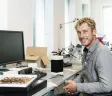
Vincent Kalkman
Principal investigator is Eric Mijts (University of Aruba). The project manager at Naturalis is entomologist Vincent Kalkman.
In the Status report Dutch Biodiversity 2026 Naturalis writes extensively about nature in the Caribbean part of the Dutch Kingdom.
The best overview of the biodiversity of these islands can be found in the Dutch Caribbean Species Register.
